Quarterly Estimated Taxes for Freelancers: A Simple Guide
When you work a traditional job, your employer withholds income taxes from every paycheck. When you freelance, nobody does that for you — which means the IRS expects you to pay as you earn, on a quarterly schedule.
Miss those payments, and you’ll owe a penalty at tax time. Get them right, and you’ll avoid surprises and keep your cash flow predictable.
Here’s how quarterly estimated taxes work.
Who Needs to Pay?
You generally need to pay quarterly estimated taxes if:
- You expect to owe at least $1,000 in federal taxes for the year after subtracting withholding and credits
- Your withholding will cover less than 90% of your current year’s tax bill, or less than 100% of last year’s tax bill
Most full-time freelancers and independent contractors will clear that $1,000 threshold easily. If freelancing is a side income on top of a salaried job with withholding, you may be able to avoid estimated payments by adjusting your W-4 at your day job instead.
The Four Due Dates
The IRS divides the year into four payment periods. For 2026, the due dates are:
| Payment Period | Due Date |
|---|---|
| Jan 1 – Mar 31 | April 15, 2026 |
| Apr 1 – May 31 | June 15, 2026 |
| Jun 1 – Aug 31 | September 15, 2026 |
| Sep 1 – Dec 31 | January 15, 2027 |
Note that the periods are unequal in length — the second period is only two months. That’s not a typo; it’s just how the IRS has always structured it.
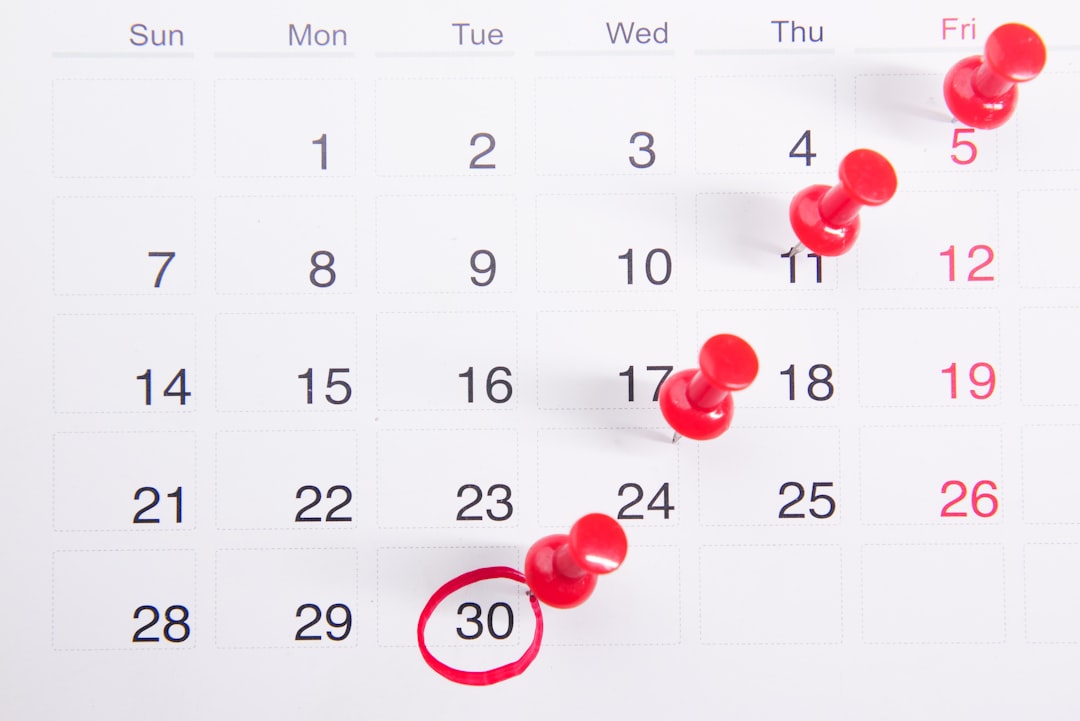
If a due date falls on a weekend or federal holiday, it shifts to the next business day. Mark these dates in your calendar now.
How Much Should You Pay?
There are two safe harbor calculations. Hit either one and the IRS won’t charge an underpayment penalty, even if you end up owing money at filing:
Option 1 — 90% of current year’s tax: Pay at least 90% of what you’ll actually owe for 2026. This is precise but requires you to estimate your income, which can be tricky if your freelance revenue varies.
Option 2 — 100% of prior year’s tax (safe harbor): Pay the same total amount you owed last year, spread across four payments. If your prior year adjusted gross income was over $150,000, the threshold rises to 110% of last year’s tax.
Most freelancers use the prior year safe harbor — it’s simpler and removes the guessing game. Look at last year’s tax return (line 24 on Form 1040 is your total tax), divide by four, and pay that amount each quarter.
What Tax Rate to Use
Your estimated tax payments need to cover two things:
- Income tax — based on your marginal bracket
- Self-employment tax — 15.3% on the first $184,500 of net self-employment income (2026 Social Security wage base; adjusts annually), plus 2.9% Medicare on income above that
A useful rule of thumb: set aside 25–30% of every payment you receive. That covers most freelancers in the 22% bracket after accounting for the SE tax deduction and other deductions.
If you’re in a higher bracket or your income is inconsistent, consider working with a CPA to calculate more precisely.
How to Make Payments
The easiest method is the IRS Direct Pay portal or the Electronic Federal Tax Payment System (EFTPS). Both are free and allow you to schedule payments in advance.
You can also mail a check with Form 1040-ES, pay by debit or credit card (third-party processor fees apply), or use IRS2Go, the IRS mobile app.
EFTPS is worth setting up if you’ll be paying quarterly for the long term — you can schedule all four payments at the start of the year and not think about it again.
What Happens If You Miss a Payment?
The IRS charges an underpayment penalty, currently based on the federal short-term rate plus 3 percentage points. In practice it’s often a few hundred dollars — annoying but not catastrophic.
More importantly: missing quarterly payments means a large, unexpected bill in April. For most freelancers, cash flow planning is the bigger motivation for staying on schedule.
State Estimated Taxes
Most states that collect income tax also require quarterly estimated payments. Due dates and thresholds vary by state. Check your state revenue agency’s website — many use the same federal schedule, but not all.
Staying on Top of It Year-Round
Estimated taxes are manageable when you track your income and expenses consistently throughout the year. If you know your net profit each month, calculating your quarterly payment is simple arithmetic.
numlr gives you a running view of your income and deductible expenses, so you always know where your tax liability stands — and you’re never scrambling to reconstruct the quarter before a payment is due. Try numlr free.